Building projects require careful coordination across multiple trades to achieve lasting results. Understanding the Role of Painting Services in Construction Projects helps property owners determine the ideal schedule for applying protective coatings.
- Topic
- Painting Services
- Primary service
- Painting Services
- Reading time
- 5 min read
- Last reviewed
- 2026-09-04
When Should Finish Work Begin During a Build?
Applying wall coatings too early can trap moisture inside fresh plaster and wood, leading to premature bubbling or peeling. While proper finishes cannot correct underlying structural damage, they establish a vital barrier against environmental wear once the framing and drywall are fully cured and dry.
Coordinating these final stages ensures that every surface receives adequate protection before interior fixtures are installed. Getting this sequence right prevents costly rework and safeguards the entire investment.
How to approach this stage safely
Following a structured method ensures that every detail is addressed correctly. Begin by assessing the site conditions and gathering required materials. Coordinate each phase carefully to maintain safety standards and keep the timeline on track for a successful outcome.
- Inspect all surfaces for existing damage
- Clear the workspace of debris and hazards
- Verify measurements and material specifications
- Confirm safety gear is worn by all workers
Official sources and further reading
Related services
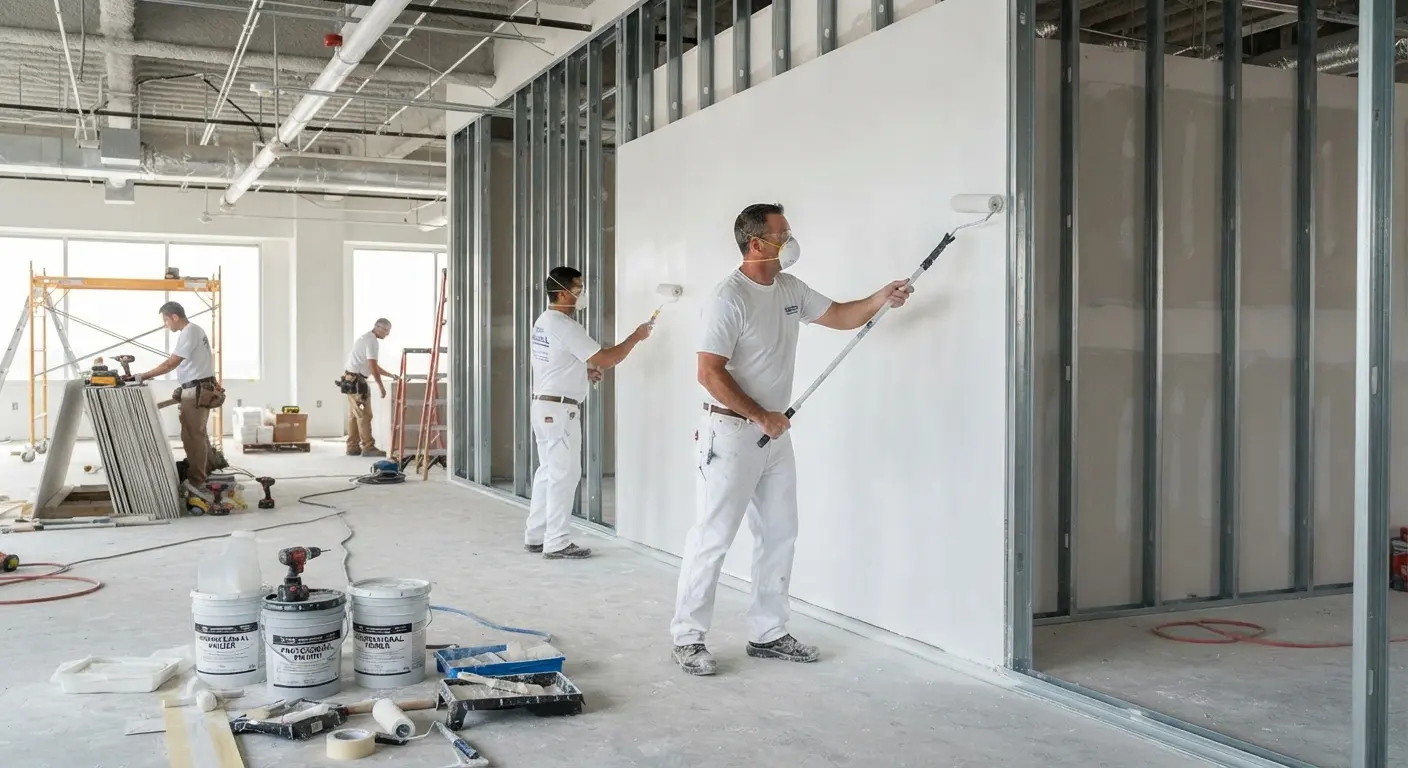
Professional painting contractors work closely with project managers to integrate their tasks seamlessly into the overall construction schedule. This collaboration allows crews to prepare surfaces efficiently while other interior trades complete their primary installations. Establishing a clear timeline prevents scheduling conflicts and ensures that protective coatings cure without interruption from heavy foot traffic or dust generation. Selecting the appropriate paint specifications for different zones within a building demands technical expertise and familiarity with regional requirements.
Professional painting contractors work closely with project managers to integrate their tasks seamlessly into the overall construction schedule. This collaboration allows crews to prepare surfaces efficiently while other interior trades complete their primary installations. Establishing a clear timeline prevents scheduling conflicts and ensures that protective coatings cure without interruption from heavy foot traffic or dust generation.
Selecting the appropriate paint specifications for different zones within a building demands technical expertise and familiarity with regional climate factors. High-moisture areas require specialized formulations to resist mold growth and maintain aesthetic appeal over years of heavy use. Exterior surfaces benefit from weather-resistant layers that shield the underlying structure from solar radiation, heavy rain, and temperature fluctuations.
Quality control inspections conducted throughout the application process guarantee that every finished surface meets rigorous industry standards for durability and appearance. Painters verify film thickness, adhesion strength, and color consistency across all treated areas before handing the completed space over to the client. These thorough evaluations protect the structural integrity of the property and reduce the need for premature maintenance interventions.